


The artificial intelligence (AI) investment thesis continues evolving and remains as vibrant as ever. It’s also an increasing centerpiece in wealth management practices, serving as an avenue for eliminating mundane tasks, creating time efficiencies and wooing tech-savvy clients.
Somewhere in between those exciting advancements is another issue advisors need to be mindful of: The extent to which prospects and clients are turning to AI for financial advice. This isn’t about clients looking to AI as an advisor replacement tool. That’s not the case and any number of polls and surveys confirm clients want the human touch and personalization that advisors offer.
Still, advisors need to consider the findings in a recent survey by BestMoney.com, which indicates 82% of those queried “trust AI for financial information and guidance” and the same percentage have increased their use of the technology as a tool for finances over the past year.
Interestingly, finances were the second-most searched topic on various AI platforms, trailing only health and wellness topics and just ahead of subjects related to tech support.
Some Americans Are Using AI for Investment Advice
The BestMoney survey indicates that 64% of those polled are in fact turning to AI for investment advice. Sounds bad, but it’s an opportunity for advisors because they can impart upon clients that despite advances, the most accessible forms of AI have questionable track records of selecting individual securities and if it’s basic portfolio construction principles clients are tapping AI for, they may be unaware they’re getting cookie-cutter answers whereas human advisors can and do offer more tailored choices.
Fortunately, the survey also points out that Americans are reaching out to AI for assistance on personal finance matters, such as budgeting, credit scores, savings and the like.
“So with more than half of the country utilizing AI for financial advice, we wanted to understand which specific topics are being discussed,” notes BestMoney. “Leading the way with 64% of people reporting it is investing. For some Americans, advice is focused on learning the basics, while others are asking for specific advice to outline long-term financial plans.”
Those are topics advisors can assist with as well, likely in superior fashion relative to AI. The same is true of taxes, which is a hot topic on AI, too, and one that can also invite one-size-fits-all answers that are too the detriment of those running the queries.
“Coming in fourth place for financial topics are taxes with more than two-fifths of Americans seeking guidance,” adds BestMoney. “These days many people turn to online tools and services to help file their taxes because the process can be daunting. But in the age of artificial intelligence, many are opting to use the technology to learn more about tax deductions, the difference between state and federal taxes, and even how to file themselves.”
Understanding Why Folks Use AI for Financial Help
Advisors should also understand why some clients are using AI for financial tips. As the chart below indicates, it’s not about an AI platform’s stock-picking acumen. Not even close.
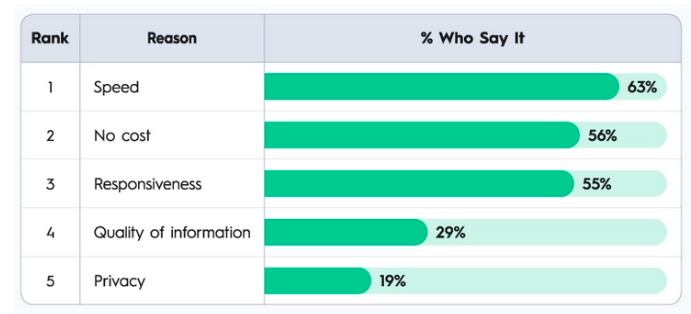
(Image: BestMoney.com)
So it’s really about convenience and favorable costs. Advisors can thwart this threat by clearly articulating their value propositions and making themselves accessible to clients, regardless of the asset and income levels.
Related: Trading ETFs the Smart Way: When Limit Orders Beat Market Orders