
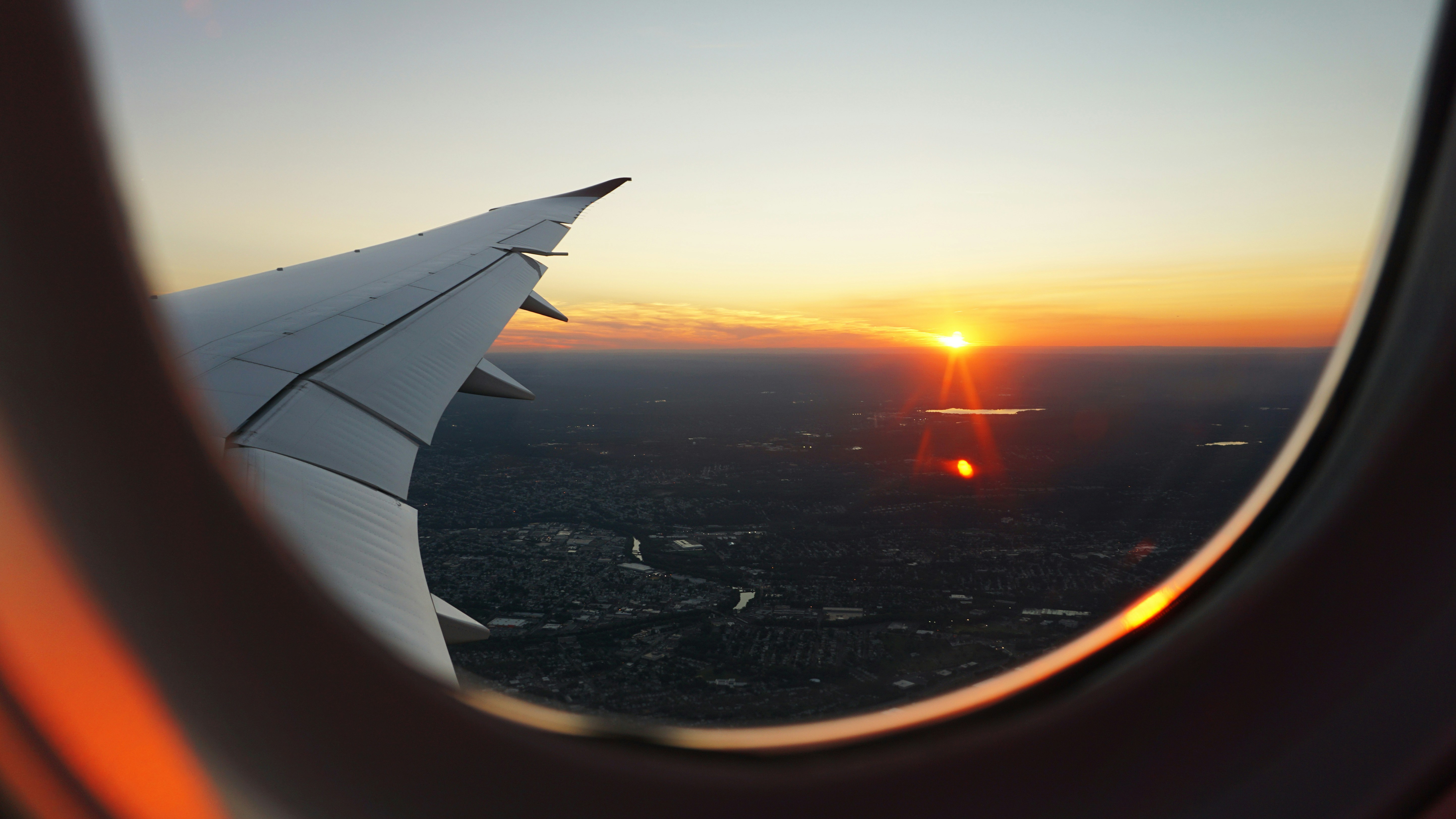

Last week, my wife and I took a trip to California for her birthday. It was supposed to be a fairly simple trip. Fly out of Denver before a snowstorm, spend a few days in Monterey and Santa Cruz, and enjoy a little time away. Along the way, I realized there are valuable investing lessons from travel experience that can apply to everyday life.
Instead, it turned into one of those travel experiences where everything that could go sideways seemed to happen.
We changed our original flight to the night before to avoid what was expected to be a massive snow storm overnight. The late night flight pushed back on time, but there was a maintenance issue so we had to pull back into the gate. Thankfully, it was fixed, but we began already a late night flight an hour delayed. Then it took nearly an hour for de-icing. By the time we finally took off, we were already running two hours behind schedule.
Then, midway through the flight, there was a medical emergency.
A passenger in the back of the plane was having trouble breathing. My wife, who is a nurse, went back to help along with a doctor who happened to be on board. The woman was given oxygen, and they started monitoring her condition.
At the same time, a flight attendant was relaying information to United.
The problem was this. United wanted an immediate answer.
How serious is this?
Do we divert the plane or not?
The doctor essentially said, “I need a few more minutes. I can’t make that call yet. ”
But United couldn’t or didn’t want to wait. The decision was made anyway.
The plane diverted to Salt Lake City.
Ironically, within minutes, the woman improved significantly. By the time we landed, she was completely fine.
But because the decision had already been made, the consequences kept unfolding. The flight eventually got canceled. There was apparently nobody available to fuel the aircraft at that hour. Passengers needed hotels. Flights had to be rebooked. Operations were disrupted.
It became a very costly chain reaction.
And as frustrating as the experience was in the moment, I kept thinking about how often this same dynamic shows up in investing. These investing lessons from travel experience made me reflect on the costs of rushed actions.
Lesson #1: Rushed Decisions Can Become Costly Decisions
One of the biggest mistakes investors make is believing they must react immediately.
A scary headline appears. Markets fall sharply. Economic forecasts worsen. Someone on television confidently predicts disaster. And suddenly it feels like a decision must be made right now.
Sell.
Move to cash.
Reduce risk.
Do something.
But many times, the urgency itself is the problem.
The market is one giant machine constantly tempting investors to react before they have full information. And when emotions rise, our brains often confuse urgency with importance.
That is where costly mistakes happen.
During periods of uncertainty, investors often feel pressure to “take control. ” But reacting too quickly can create unintended consequences that are far larger than the original problem.
We saw this during COVID.
We saw it during inflation fears.
We saw it during banking concerns.
We saw it during the bear market in 2022.
And we continue to see it whenever global conflict, tariffs, recession fears, or political uncertainty dominate headlines. Investing lessons from travel experience often remind us that uncertainty and unpredictable outcomes are part of both journeys.
Many investors who sold during stressful moments eventually discovered something uncomfortable.
The emotional relief was temporary.
But the financial damage could become permanent.
That does not mean investors should never make changes. Sometimes adjustments are necessary. But there is a major difference between thoughtful decisions and emotionally rushed decisions.
Often the best thing an investor can do is pause.
Allow more information to emerge.
Let emotions settle.
Return to the original plan.
Because once a reactive decision is made, the second challenge appears: figuring out when to reverse it.
That is much harder than most people realize.
The Illusion of Immediate Answers
One reason this happens is because uncertainty feels uncomfortable.
Our brains crave resolution. We want certainty and clarity. We want someone to confidently tell us what comes next.
But investing rarely works that way.
In fact, some of the worst investment decisions in history came from investors demanding certainty during periods when certainty simply did not exist.
The reality is that markets often recover long before the headlines improve.
If investors wait until everything feels safe again, much of the recovery may already be gone.
That is why discipline matters.
Not because disciplined investing feels emotionally easy.
But because reacting emotionally often creates bigger problems than the uncertainty itself.
Lesson #2: Ask For What You Really Want
After the flight was canceled, we immediately started trying to rebook flights.
Upon deplaning, I got United on the phone fairly quickly. I had to or all the seats would be taken the next day. I asked something I honestly did not think they would approve.
My wife and I were going to Santa Cruz first. We didn’t want to fly into SFO in the morning and then fight traffic to get to Santa Cruz. So, I asked if they would book us on a Delta flight directly into San Jose.
I fully expected the answer to be no.
Instead, the representative paused for a few seconds and said, “I can do that for you. ”
And just like that, we were rebooked.
That moment stayed with me because the same principle applies far beyond travel.
If we never ask for what we really want, the answer is already no.
Yet many people avoid asking because they fear rejection, discomfort, or embarrassment.
Advisors experience this all the time.
We hesitate to ask for referrals.
We hesitate to ask clients deeper questions.
We hesitate to ask prospects to move forward.
Investors do it too.
They avoid asking important questions because they worry about sounding uninformed.
They avoid seeking help because they think they should already know the answer.
They avoid difficult conversations around money because discomfort feels easier in the short term.
But sometimes one question changes everything. Clearly, investing lessons from travel experience can highlight the power of simply asking for what matters most.
Sometimes simply asking opens doors that never would have opened otherwise.
And even when the answer is no, nothing was lost.
The outcome was already no before the question was asked.
Investing Requires Patience And Courage
What struck me most about the entire experience was how emotional situations pressure us in two opposite directions.
Sometimes emotions pressure us to act too quickly.
Other times emotions stop us from acting at all.
Investing requires learning how to navigate both.
The patience to avoid rushed decisions.
And the courage to ask difficult questions, seek guidance, or take opportunities when they appear.
That balance matters more today than ever.
Investors are being flooded with information every hour of every day.
In such an environment, emotional discipline becomes incredibly valuable.
Because the greatest risk for many investors is not necessarily the market itself.
It is how they respond to uncertainty inside the market.
The trip eventually turned out great.
But the beginning of it offered two reminders that apply directly to investing and life.
Don’t rush decisions simply because emotions demand immediate answers.
And don’t be afraid to ask for what you really want.
Both lessons can save us from costly mistakes.