
Let’s be honest about what’s actually happening.
Every generation gets its turn at the edge of the world. In late 1999, millions were told that midnight itself had become a threat. Computers would fail. Banks would freeze. Markets would crack. Infrastructure would falter. The calendar was about to change, and with it, perhaps modern life. The warnings were confident. The tone was apocalyptic. The public mood was unmistakable! This time, the system might not hold!
And then, in the most important sense, it did.
Not because the concern was irrational. Not because the risk was invented. But because fear has always had a gift for sounding more certain than reality. People are extraordinarily good at imagining collapse in vivid detail and remarkably poor at estimating resilience, adaptation, and recovery while events are still unfolding.
That is not just a historical observation. It is one of the most important lessons I’ve learned in delivering advice to clients and advisors.
Clients do not experience uncertainty as economists do. They do not feel it as a data series, a white paper, or a probability distribution. They feel it as vulnerability. They feel it in headlines, in account balances, in market drops, in the quiet dread that whispers, “What if this time really is different?”
This is where the financial advisor’s role is most valuable to the clients. The industry often defines value through performance, products, access, or technical knowledge—all of those matter. But when things become loud, the advisor’s real work is more essential than any of those things. It is to help clients remain faithful to a sound plan even when the world gives them every reason to abandon it.
That is our profession at its highest level.
The pattern beneath the panic
The names change. The pattern does not.
Y2K. The tech wreck. The global financial crisis. Sovereign debt fears. The pandemic. Inflation shocks. Rate spikes. Banking tremors. Trade ruptures. Geopolitical instability. Each arrives wrapped in its own language, its own urgency, its own claim to uniqueness. Every era insists its panic is more sophisticated than the last.
Sometimes the threat is real and severe. Sometimes it is overstated. More often than not, it is both serious and misunderstood. But for advisors, the central issue is not whether every crisis can be forecast with elegance. It is whether clients can be guided through uncertainty without mistaking fear for wisdom.
Because in investing, fear rarely introduces itself as fear. It often arrives dressed as “prudence”.
It sounds sensible. Move to cash. Wait for clarity. Get out for now and come back later. The language is calm. The instinct feels protective. Yet some of the greatest financial damage is not caused by volatility itself, but by the decisions investors make in response to volatility.
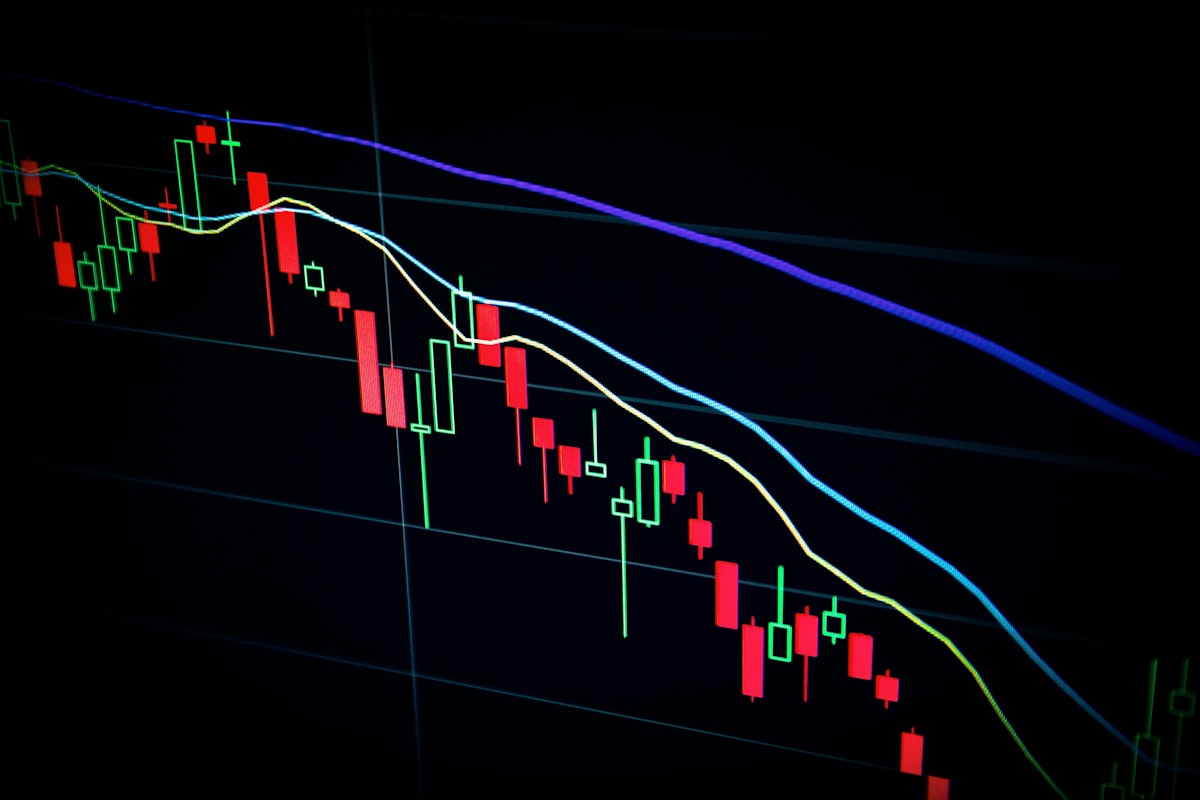
A client who sells after a 30% decline is not escaping risk. That client is choosing one form of risk for another: the certainty of crystallized loss over the discomfort of disciplined endurance. And in doing so, may walk away from the very recovery the plan required.
The market decline is painful. The abandonment of the plan is often catastrophic.
Why history belongs in the advice process
History matters because it restores proportion.
It reminds clients that fear is a permanent feature of financial life, not evidence that planning has failed. It shows that the loudest moments are often the worst times to make permanent decisions. It demonstrates that systems bend, adapt, repair, and recover in ways that are hard to see from inside the storm. Most of all, it teaches that temporary events become lasting damage only when behavior turns them into it.
This is where many advisors still leave value on the table. They explain markets. They review portfolios. They interpret news. But they do not always frame today’s anxiety inside a longer human pattern.
They should.
Perspective is not decoration. It is part of your advice.
The advisor who can situate a frightening moment within a broader historical context is doing more than sounding informed. That advisor is lowering the probability that a client will make a short-term emotional choice with long-term consequences.
In a profession obsessed with precision, this may be one of the most underappreciated forms of value creation.
The advisor as steward of judgment
The modern client does not lack information. The modern client is drowning in it.
What is scarce is interpretation and context. What is scarce is proximity to their advisor. Also scarce is the ability to separate what feels urgent from what is actually important.
That is why the best advisors are not simply allocators of capital. They are stewards of decision-making quality. They are part strategist, part behavioral coach, part planner, part historian. They help clients slow down when the world speeds up. They create distance between the event and the reaction. They keep a difficult season from becoming a damaging decision.
In practice, this changes everything.
Instead of asking, “What headline should be answered today?” The advisor asks, What truth needs to be protected here? Instead of reacting to noise, the advisor returns the client to first principles. What has actually changed? What has not changed? What was the plan designed to survive? What would the cost be of getting this wrong now?
These are not small questions. They are often the difference between an investor who merely experiences volatility and one who is permanently altered by it.
What excellence looks like
The best advisory relationships are not built only in rising markets. They are revealed in falling ones. Excellence looks like preparation before panic:
· It looks like clients are being reminded, long before the next crisis, that discomfort is not the same as danger.
· It looks like a calm communication style without being complacent, serious without being theatrical.
· It looks like an advisor who neither minimizes risk nor magnifies it for effect.
· It looks like trust that has been earned deeply enough that the client picks up the phone before making the mistake, not after.
This is where the profession proves its worth, not by predicting every storm. Not by pretending uncertainty can be eliminated. But by helping clients live through uncertainty without surrendering to it.
The enduring lesson
Y2K is a helpful reminder that what people fear often differs from what actually happens. Risk is real. So is resilience. So is adaptation. So is recovery.
The world will never run out of reasons to be afraid. There will always be another deadline, another downturn, another crisis declared unique enough to suspend memory and urgent enough to justify retreat.
Our responsibility is to stand in that gap: between alarm and action, between volatility and meaning, between a client’s impulse and that client’s future. Because the real test of a financial plan is not whether it looks sensible when conditions are calm, it is whether someone is still willing to follow it when the world goes dark.
Related: AI Raised the Bar Overnight—Most Advisory Practices Didn’t Notice