

Why Worry?
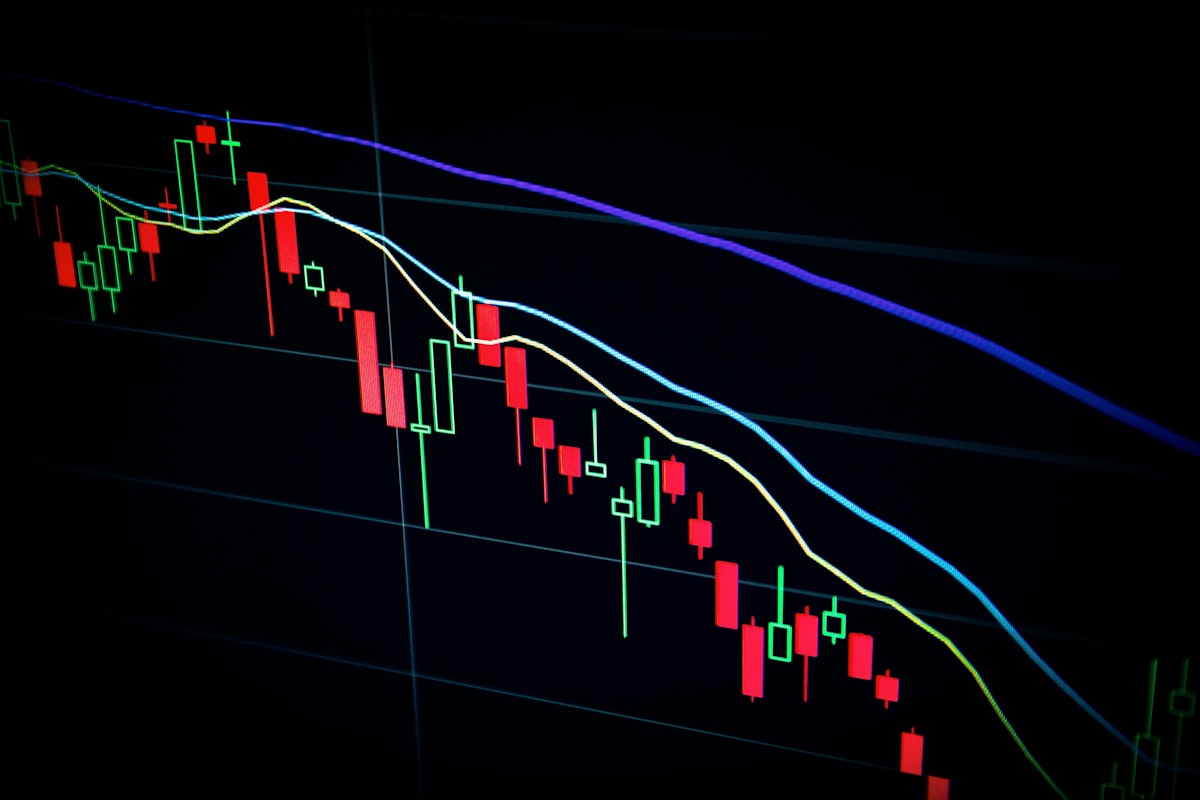
In 2025, the ‘wall of worry’ comprised multiple unnerving concerns, from Federal Reserve policy uncertainty to trade tensions, unmeasurable geopolitical risk, and questions about AI ROI. Market volatility was characteristically saw-toothed, yet investors benefited as equities climbed higher despite persistent issues.

Source: yahoo finance
So far in 2026, new uncertainties have been added to the wall, leaving many investors wondering whether to reduce equity allocations. Yet stepping aside runs the risk of missing out on gains if strong performance continues. Calamos Investments offers alternative strategies that provide market exposure with benefits such as attractive autocallable income and 100% downside protection.
Calamos Structured Protection ETFs Help Ensure There’s Minimum Downside
This hypothetical example is for illustrative purposes only. There is no guarantee the Fund will be successful in providing sought-after protection. The outcomes that the Fund seeks to provide may only be realized if you are holding shares on the first day of the Outcome Period and continue to hold them on the last day of the Outcome Period, approximately one year. There is no guarantee that the Outcomes for an Outcome Period will be realized or that the Fund will achieve its investment objective.
Calamos Structured Protection ETFs are designed to match the positive price returns of the S&P 500, Nasdaq-100, Russell 2000, and Bitcoin up to a defined cap while protecting against 100% of losses over one-year outcome periods (before fees and expenses).
Calamos Laddered S&P 500® Structured Alt Protection ETF (CPSL) provides S&P 500 exposure while limiting downside risk through a laddered portfolio of 12 monthly 100% protected Calamos S&P 500 Structured Alt Protection ETFs with differentiated, staggered annual outcome periods to eliminate market timing considerations.
In These Uncertain Times, the Appeal of Autocallable Income Is Clear
Calamos Autocallable Income ETF (CAIE) and Calamos Nasdaq® Autocallable Income ETF (CAIQ) seek to provide high, stable income derived from equity market parameters, rather than credit risk or duration, providing a genuinely diversified income source.
Attractive Yield Compared to Other Asset Classes
Chart source: Bloomberg and Morningstar Direct. Data as of 10/1/2025. Unmanaged index returns, unlike fund returns, do not reflect fees, expenses, or sales charges. Investors cannot invest directly in an index. Total return assumes the reinvestment of income. Current performance may be higher or lower than the performance data shown. Yields represented by trailing 12-month yield for: Top Derivative Income Funds (Represented by the top 10 Funds by AUM as of 9/30/25 in the derivative income category, excluding single stock funds), Bloomberg US Corporate Index, and Bloomberg US Aggregate Corporate High Yield Index. Yield represents the weighted average coupon for: MerQube US Large Cap Vol Advantage Autocallable and MerQube Nasdaq-100 Vol Advantage Autocallable Index. Investors should consider the risks of investing in CAIE and CAIQ and review the prospectus prior to investing.
Performance data quoted represents past performance, which is no guarantee of future results. Current performance may be lower or higher than the performance quoted. The principal value of an investment will fluctuate so that your shares, when sold, may be worth more or less than their original cost.
CAIE and CAIQ deliver high, stable monthly income while reducing downside risk through a portfolio of 52+ autocallables tied to equity market performance rather than fixed-income factors like credit or duration.
The fund’s autocallables have similar terms with coupon payments and principal at maturity tied to the MerQube Autocallable Indices—benchmarks optimized for the autocallable strategies.
-
CAIE and CAIQ currently yield approximately 14.08% and 17.74% (weighted average coupon as of 2/18/26) and seek favorable tax treatment on distributions versus ordinary income. As stated, yield is tied to equity performance and is not susceptible to fixed-income credit and duration risk.
-
Their yield advantage can provide a significant offset to equity depreciation during corrections or bear markets. Coupons are paid as long as the underlying reference index stays above the barrier level (-40% for CAIE, -30% for CAIQ*). The principal is only at risk if the index falls below these barriers at maturity—historically rare and short-lived events.
Source: Calamos Investments LLC
*In other words, the Underlying Reference Indices have fallen to 60% (CAIE) and 70% (CAIQ) of their value compared to when an autocallable was included in the index’s portfolio.
Summary
The market’s sensitivity to Fed policy, AI earnings expectations, and geopolitical uncertainty makes it susceptible to volatility in 2026. However, completely derisking could mean missing continued gains. For investors seeking market participation with a more conservative risk profile—such as retirees—Calamos alternative solutions warrant consideration.
Visit www.calamos.com/ETFs to learn more about our alternative S&P 500 solutions and complete lineup of ETFs, or contact us at 866.363.9219.
Related: Crypto Winter Calls for Protected Bitcoin Exposure
Before investing, carefully consider the Fund’s investment objectives, risks, charges, and expenses. Please see the prospectus and summary prospectus containing this and other information, which can be obtained by calling 1-866-363-9219. Read it carefully before investing.
An investment in the Fund is subject to risks, and you could lose money on your investment in the Fund. There can be no assurance that the Fund will achieve its investment objective. Your investment in the Fund is not a deposit in a bank and is not insured or guaranteed by the Federal Deposit Insurance Corporation (FDIC) or any other government agency. The risks associated with an investment in the Fund can increase during times of significant market volatility. The Fund also has specific principal risks, which are described below. More detailed information regarding these risks can be found in the Fund’s prospectus.
The Structured Protection Fund(s) face numerous market trading risks, including authorized participation concentration risk, cap change risk, capital protection risk, capped upside risk, cash holdings risk, clearing member default risk, correlation risk, derivatives risk, equity securities risk, investment timing risk, large-capitalization investing risk, liquidity risk, market maker risk, market risk, nondiversification risk, options risk, premium-discount risk, secondary market trading risk, sector risk, tax risk, trading issues risk, underlying ETF risk and valuation risk. For a detailed list of Fund risks, see the prospectus.
There is no assurance that the Fund(s) will be successful in providing the sought-after protection. The outcomes that the Fund(s) seeks to provide may only be realized if you are holding shares on the first day of the outcome period and continue to hold them on the last day of the outcome period, approximately one year. There is no guarantee that the outcomes for an outcome period will be realized or that the Fund(s) will achieve its investment objective. If the outcome period has begun and the underlying ETF has increased in value, any appreciation of the Fund(s) by virtue of increases in the underlying ETF since the commencement of the outcome period will not be protected by the sought-after protection, and an investor could experience losses until the underlying ETF returns to the original price at the commencement of the outcome period. Fund shareholders are subject to an upside return cap (the “Cap”) that represents the maximum percentage return an investor can achieve from an investment in the fund(s) for the outcome period, before fees and expenses. If the outcome period has begun and the Fund(s) have increased in value to a level near the Cap, an investor purchasing at that price has little or no ability to achieve gains but remains vulnerable to downside risks. Additionally, the Cap may rise or fall from one outcome period to the next. The Cap and the Fund(s) position relative to it should be considered before investing in the Fund(s). The Fund(s) website, www.calamos.com, provides important Fund information as well as information relating to the potential outcomes of an investment in the Fund(s) on a daily basis.
The Fund(s) are designed to provide point-to-point exposure to the price return of the reference asset via a basket of Flex Options. As a result, the ETFs are not expected to move directly in line with the reference asset during the interim period. Investors purchasing shares after an outcome period has begun may experience very different results than the fund’s investment objective. Initial outcome periods are approximately 1-year beginning on the fund’s inception date. Following the initial outcome period, each subsequent outcome period will begin on the first day of the month the fund was incepted. After the conclusion of an outcome period, another will begin.
FLEX Options Risk—The Fund(s) will utilize FLEX Options issued and guaranteed for settlement by the Options Clearing Corporation (OCC). In the unlikely event that the OCC becomes insolvent or is otherwise unable to meet its settlement obligations, the Fund(s) could suffer significant losses. Additionally, FLEX Options may be less liquid than standard options. In a less liquid market for the FLEX Options, the Fund(s) may have difficulty closing out certain FLEX Options positions at desired times and prices. The values of FLEX Options do not increase or decrease at the same rate as the reference asset and may vary due to factors other than the price of the reference asset.
Shares are bought and sold at market price, not net asset value (NAV), and are not individually redeemable from the fund. NAV represents the value of each share’s portion of the fund’s underlying assets and cash at the end of the trading day. Market price returns reflect the midpoint of the bid/ask spread at the close of trading on the exchange where fund shares are listed. 100% capital protection is over a one-year period before fees and expenses. All caps are pre-determined. Cap Rate – Maximum percentage return an investor can achieve from an investment in the Fund if held over the Outcome Period.
The principal risks of investing in the Calamos Autocallable Income ETFs include: autocallable structure risk, contingent income risk, early redemption risk, barrier risk, authorized participant concentration risk, calculation methodology risk, cash holdings risk, correlation risk, costs of buying and selling fund shares, counterparty risk, credit risk, derivatives risk, equity securities risk, index risk, interest rate risk, investment in a subsidiary, laddered portfolio risk, liquidity risk, market maker risk, market risk, new fund risk, non-diversification risk, premium-discount risk, secondary market trading risk, swap agreement risk, tax risk, trading issues risk, valuation risk, and volatility target index risk.
Autocallable Structure Risk: The Fund’s returns are correlated to the performance of a synthetic portfolio of autocallable notes tracked by the Laddered Autocall Index. Autocallable notes have specific structural features that may be unfamiliar to many investors.
Contingent Income Risk: Coupon payments from the Autocalls are not guaranteed and will not be made if the Underlying Index falls below the Coupon Barrier on observation dates. This means the Fund may generate significantly less income than anticipated during market downturns.
Early Redemption Risk: Autocalls in the Portfolio may be called before their scheduled maturity if the Underlying Reference Index reaches or exceeds the Autocall Barrier on observation dates. This automatic early redemption could force reinvestment of that portion of the portfolio at lower rates if market yields have declined.
Barrier Risk: If the Underlying Reference Index falls below the Protection Level Barrier at the maturity of an Autocall in the Portfolio, that portion of the Portfolio will be fully exposed to the negative performance of the Underlying Reference Index from its initial level. This conditional protection creates a binary outcome that can result in sudden, significant losses if barriers are breached.
The S&P 500 Price Index (SPX) tracks the price return of the S&P 500 Index, which is generally considered representative of the US stock market.
The MerQube US Large Cap Vol Advantage Index is designed to provide volatility-adjusted exposure to E-Mini S&P 500 futures contracts by targeting an implied volatility of 35%, subject to a 6% decrement per annum. Unlike traditional equity indices that maintain fixed allocations, this index dynamically adjusts exposure based on market volatility conditions. During calm or typical market environments, the Index increases exposure to equity futures, while during volatile market periods, the Index reduces exposure to equity futures. Unlike other volatility target indices that rebalance daily based on realized volatility, this Index rebalances weekly (at the end of each week) based on one-week implied volatility derived from SPY weekly options prices. This approach seeks to maintain a more consistent risk profile across varying market conditions while potentially reducing drawdowns during market stress and improving risk-adjusted returns over time. The Index is a rules-based, systematic index designed to provide dynamic exposure to US large-capitalization equities while employing a volatility management methodology that seeks to maintain a target volatility level. The Index dynamically adjusts exposure between the Equity Component and a cash position in response to prevailing market volatility.
The MerQube Nasdaq-100 Vol Advantage Autocallable Index is designed to reflect the collective performance of a theoretical portfolio of 52 to 260 synthetic Autocallables arranged in a laddered structure with staggered entry points with similar fixed parameters (the “Parameters”) as described below within the section entitled “Autocallable Index Portfolio Characteristics.”
Nasdaq® is a registered trademark of Nasdaq, Inc. (which with its affiliates is referred to as the “Corporations”) and is licensed for use by Calamos Advisors LLC. The Fund has not been passed on by the Corporations as to their legality or suitability. The Fund is not issued, endorsed, sold, or promoted by the Corporations. THE CORPORATIONS MAKE NO WARRANTIES AND BEAR NO LIABILITY WITH RESPECT TO THE FUND(S).
Calamos Financial Services LLC, Distributor
© 2026 Calamos Investments LLC. All Rights Reserved. Calamos® and Calamos Investments® are registered trademarks of Calamos Investments LLC