
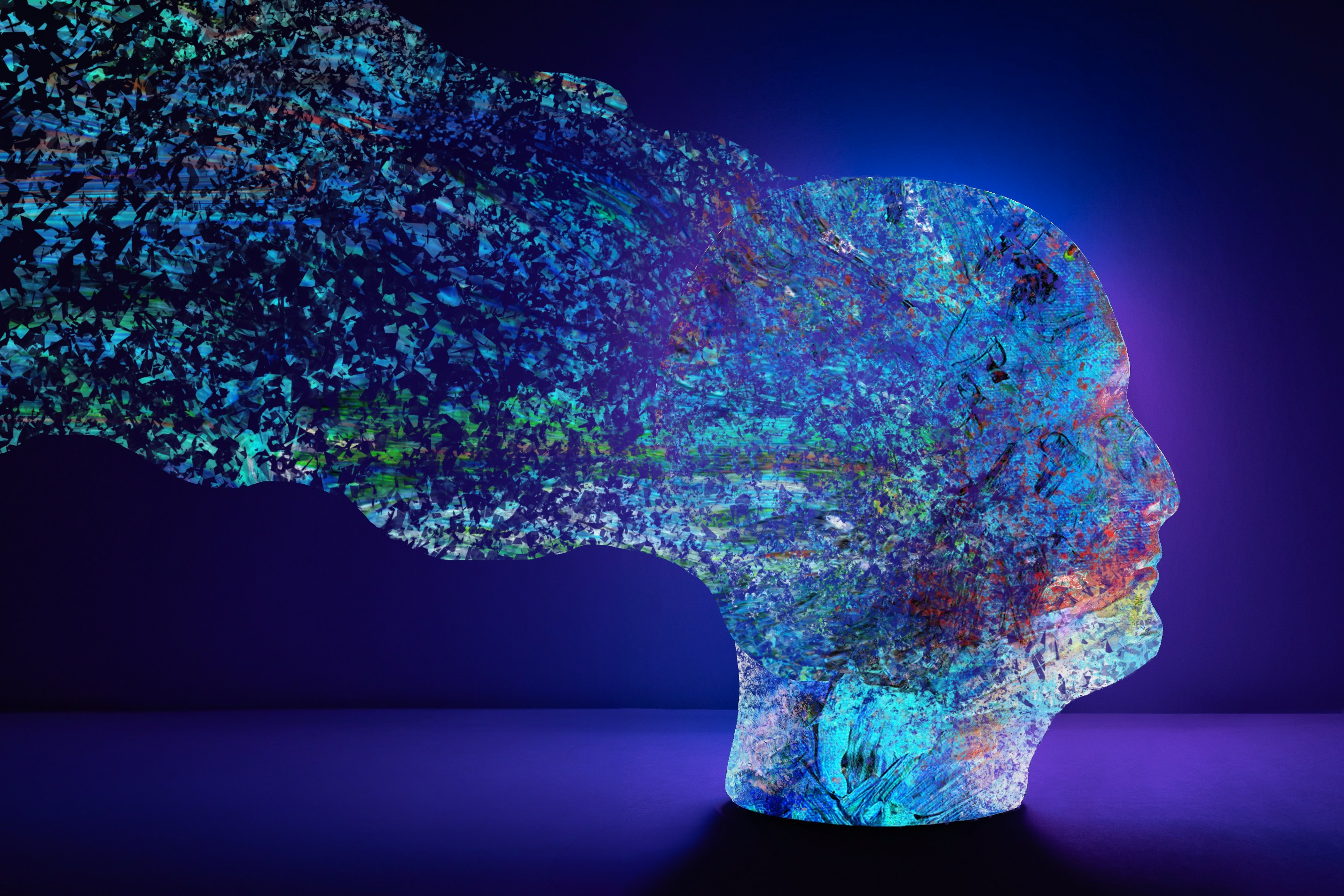

AI is scaling the world’s capacity to generate, store, and retrieve information, but the human brain still needs biological time and structural capacity to turn that information into memory, judgment, and action. The next bottleneck will not be AI capability; it will be human integration capacity.
Organizations are already producing more AI-driven output than people can durably encode, consolidate, and retrieve. This creates a new strategic need: to measure and strengthen the brain’s livewired architecture at the microstructural level — the biological infrastructure behind memory.
In the AI era, brain architecture becomes a core measure of future wealth. The real competitive advantage will come from having humans and teams whose brains can absorb complexity, consolidate meaning, retrieve knowledge under pressure, and act with wisdom.
Problem statement in one example:
My board member and I have disagreements over a strategic decision. My AI agent drafts a reply to him. His AI agent reads it, processes it, and responds: “Now we agree. ” Two AIs reach consensus in milliseconds. And of course, we quickly review the answers and provide the go-ahead confirmation, while doing similar review across many other daily exchanges with the patent office, product team, FDA, investors, accountants, commercial team, and others.
Then a few days later he and I pass each other in the corridor, and neither of us has actually encoded, consolidated, and embodied that exchange. We never fully registered it in our minds and bodies. If we disagreed last week, do we now agree? Our AIs do. We don’t. The Q&A never had time to become memory, let alone behavior.
That is the ceiling. Not a storage limit, a consolidation limit.
AI can accelerate the production of decisions almost without friction. The human brain still needs time to make a decision its own. If we do not invest in closing that gap, we hit a ceiling — and because the failure looks like “agreement,” we may not even notice we have hit it.
This is the hidden bottleneck of the AI era: high-speed output with limited biological integration bandwidth.
Solution: Enhance the brain’s consolidation capacity by strengthening its underlying architecture
Brain architecture reflects the tissue-level conditions that support memory, cognition, and resilience. It is not static. At the microstructure level, the brain is a livewired system, constantly remodeling itself in response to experience, stress, sleep, inflammation, learning, social connection, disease, and recovery.
Brain architecture captures human integration capacity. It defines whether and how intelligence turns into wisdom, action, and impact. In the AI century, that makes brain architecture a core measure of wealth.
The organizations that pair AI acceleration with human memory architecture will build deeper execution advantage. They will maintain stronger encoding under information overload, achieve better consolidation after rapid decision cycles, and preserve more reliable retrieval during uncertainty and stress. The impact reaches economic value creation, leadership quality, and societal resilience.
Call to Action
All of us, including organizations, leaders, policymakers, and investors must invest in human brain architecture with at least the same seriousness that we are investing in AI infrastructure.