

This year isn’t yet four months old, but advisors and investors are to be forgiven if they’re tired of hearing the term “SaaSpocolypse,” which refers to the carnage wrought on the software industry by artificial intelligence (AI) disruption.
Cybersecurity, previously an appealing technology segment for tactical investors, didn’t escape the damage and that makes sense because this is a software-centric industry. That confirms market participants were rightfully spooked by speculation that AI can do the work currently performed by cybersecurity vendors and potentially do it cheaper and more effectively.
However, AI’s effects on software companies and their shares aren’t linear and there are signs a rebound is afoot in the cybersecurity space. The oft-discussed iShares Expanded Tech-Software Sector ETF (IGV), a broader software exchange traded fund (ETF), is off 18% year-to-date, but I looked at three well-known cybersecurity ETFs and the worst offender is the First Trust Nasdaq Cybersecurity ETF (CIBR).
The $10. 19 billion CIBR, the pioneer in the cybersecurity ETF arena, is off 4. 6% year-to-date. All things considered, that’s not terrible and it’s higher by 4. 9% over the past 20 days, well ahead of the mini-rebound of 2. 7% notched by IGV.
Cybersecurity May Just Survive Vide Coding
Tools like Anthropic’s Claude Code, OpenAI’s Codex, and others cast a pall over cybersecurity stocks, but not to be lost in the shuffle is the fact that many of these names, including CIBR components, can’t be replaced by customers at the drop of a hat.
“Mission-critical software that delivers clear economic value should still command pricing power in a more competitive landscape,” notes AllianceBernstein. “Software companies that own authoritative enterprise datasets will be better placed to defend their competitive advantages. And customers will be more reluctant to pay high costs to replace software that is horizontally integrated across an organization. ”
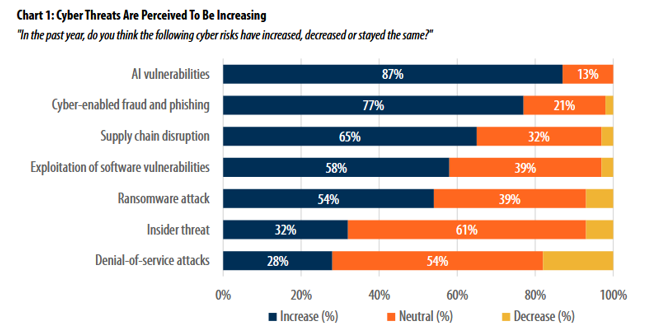
So for all the talk about vibe coding disrupting software, that concept and cybersecurity may actually work together in the future and it’s a good thing because the need for cyber defenses isn’t abating. It’s growing.
(Image Courtesy: First Trust)
“In our view, the proliferation of vibe coded applications may meaningfully expand the attack surface that enterprises must defend,” observes CIBR’s issuer. “Every new vibe coded application built without a formal security review creates a potential entry point for hackers. Hence, we think the rise of vibe coding may accelerate rather than diminish cybersecurity demand, as organizations need stronger application security testing (AST), runtime protection, and continuous monitoring to manage this risk. ”
AI Actually Increases Need for Cybersecurity
One of the reasons cybersecurity stocks, including those populating CIBR and related ETFs, stumbled on Anthropic and OpenAI headlines is because many of these companies generate revenue on subscription or “seat” models, meaning they charge clients based on how many seats/employees need access to the software.
Said another way, if AI leads to increased workplace productivity and thus layoffs, the cybersecurity revenue model could be vulnerable. But upon closer examination, the rise of AI facilitates the need bolstered cyber defenses because it creates more assets than need protection.
“The rise of agentic AI further amplifies this divergence. As organizations increase their use of autonomous AI agents, or digital ‘workers’ that can act and make decisions independently, the number of entities needing security oversight grows rapidly,” adds First Trust. “These agents introduce new identities, behavioral patterns, API interactions, and potential vectors for compromise. ”