
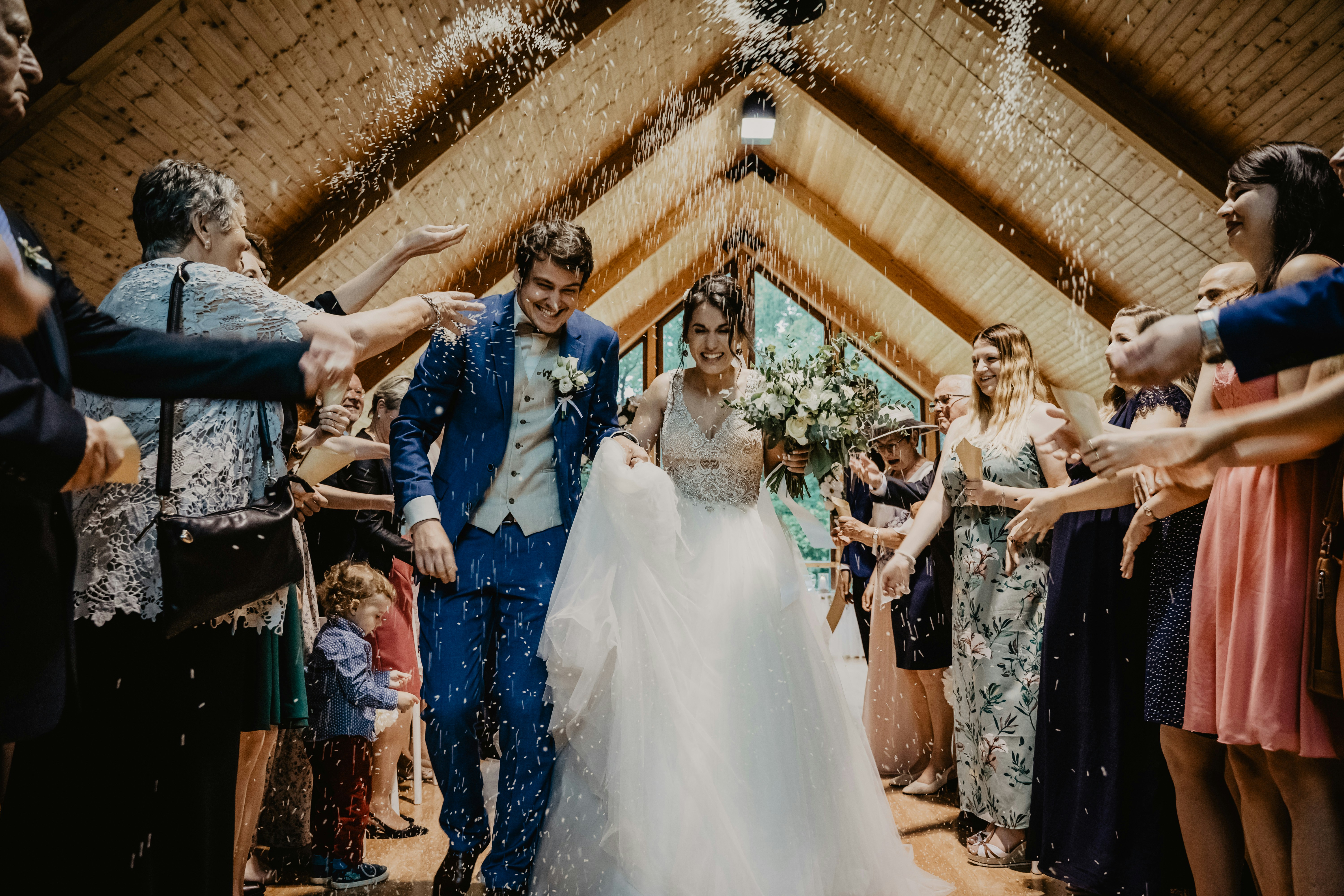

We spend so much time in business talking about innovation, automation, efficiency, scalability, optimization, and digital transformation. Which is fine. Necessary, even. But somewhere along the way, many professional experiences started to feel strangely sterile.
Every event became some version of a Marriott conference room with blue uplighting and a panel discussion titled Navigating Uncertainty in Uncertain Times.
Truly the dream. . . assuming your dream involves fluorescent lighting and lukewarm coffee.
But after hosting An Evening of Elegance: Wisdom for the Years Ahead earlier this week, I realized the connection between weddings and great client experiences goes far beyond candlelight and centerpieces.
They are built on the same fundamental truth:
People want to feel something real.
And the first step in making something feel real is surprisingly simple:
Give it a name.
Not “Q3 Client Seminar. ” Not “Estate Planning Workshop. ” Not “2026 Wealth Strategy Update. ”
A real name. One with texture. Emotion. Atmosphere. Something aligned with the venue, the audience, and the deeper purpose behind gathering people together in the first place.
Because names signal intention.
An Evening of Elegance: Wisdom for the Years Ahead immediately told guests this would not feel like a transactional financial presentation in a hotel ballroom. It felt thoughtful. Personal. Elevated. Like an experience designed with care rather than assembled from a corporate template.
That shift matters more than most firms realize.
Not to be sold to. Not just another name on a schedule. Not trapped at the shrimp cocktail table listening to a marathon pitch about private equity.
They want to feel welcome. At ease. Seen. Connected.
Genuine welcome often feels increasingly rare.
I see more and more companies swapping in-person events for digital marketing alone. There’s nothing wrong with going digital—those tools have their place. But the human touch will never go out of style. Brands that lean too far in one direction risk missing out on the moments that build real loyalty and connection.
What made this evening meaningful was the topic. We focused on aging parents and estate planning—a difficult, emotional reality for many families.
Nearly 59 million Americans help care for aging parents[1], yet the subject is oddly taboo. People will talk about market volatility, politics, even their Pilates instructor’s divorce. But conversations about aging, caregiving, inheritance, and family dynamics are still avoided.
And yet, despite the silence around these issues, almost everyone in the room had a version of the same story.
A parent beginning to decline. A difficult healthcare decision. A family conversation avoided for too long. The emotional weight of inheriting responsibility.
A brave woman asked a question in front of the entire room of nearly 200 people about her father’s battle with dementia and her concern that her sister’s involvement could complicate or undermine his estate plan. Pamela responded with practical, compassionate guidance — offering a few simple but highly effective steps families can take to help protect both the integrity of the will and the wishes of aging parents.
It was a reminder that estate planning is rarely just about documents or tax strategies. More often, it is about emotion, trust, family, and the difficult conversations people are quietly carrying long before they ever walk into an advisor’s office.
What struck me most was how honesty quickly transformed the room. Deeper, more human, less transactional conversations emerged—the precise outcome of designing for genuine connection.
That is the thing about thoughtfully designed experiences. When people feel comfortable, they stop performing.
What I’m realizing more and more is that affluent clients are not looking for more information. They are looking for discernment. They want environments, relationships, and experiences that feel intentional. Confidence without arrogance. Warmth without performance. Elegance without trying too hard.
That was the spirit behind this event.
Yes, there were talks on estate and legacy planning, but the goal was simpler: let people exhale, spark postponed conversations, and remind them they are not alone.
And ironically, the details guests commented on most were the smallest ones.
The olive tree favors.
The candlelight.
The conversational layout of the room.
The custom drink stirrers that, for reasons I still do not fully understand, became wildly popular.
One guest spent five full minutes raving about the miniature matchboxes. Honestly, that felt like a pretty impressive ROI for a detail I nearly axed from the budget.
That connects to a larger truth about hospitality: the details that stick are almost never the ones you’d bet on.
Nobody leaves a great wedding talking about the chair covers.
They talk about the feeling in the room.
And in wealth management, that emotional connection can matter more than any technical detail.
Because trust is not built exclusively during major financial moments. It is built in the accumulation of small interactions over time. The remembered detail. The thoughtful follow-up. The calm tone during uncertainty. The introduction that turns into a meaningful relationship six months later.
Clients remember how you make them feel long before they remember what was on slide 14.
That may sound obvious, but our industry does not always behave that way. Financial services can sometimes confuse professionalism with emotional distance, as if being polished requires being impersonal.
I actually think the opposite is true.
The highest level of service feels deeply human.
Not casual. Not sloppy. Human.
There is an ease to it. A confidence. The feeling that someone thought ahead for you before you even had to ask.
To me, that is real elegance.
Not extravagance. Not excess. Intentionality.
And maybe that is why the wedding analogy keeps holding up.
The best weddings are never really about the flowers or the signature cocktail everyone forgets by dessert; rather, they work because people feel emotionally connected to the experience.
The same is true for brands.
Especially now.
Because now, in a world overflowing with accessible information and automation, the main differentiator is authentic, memorable human experience.
People will forget the presentation.
They will remember the atmosphere—the feeling of welcome, connection, and genuine care. That is what truly lasts and creates loyalty. In both events and business, always design for authentic human connection—because that's the experience that endures.
1: https://crr. bc. edu/family-caregivers-how-many-and-who-are-they